Why ContextClone
Distributing the work is the easy half. We distribute the context.
A swarm is limited by what each agent knows when it acts, and by whether anyone catches it when it is wrong. We control both.
The problem with swarms
When agents brief each other, context drifts.
One mistake becomes the next premise.
Nobody can prove the team helped.
No chatter. No drift. No mistakes passed along.
At 100 agents: 4,950 possible conversations. Or 100.
With 24 agents: 276 possible agent-to-agent channels when agents talk to each other, against 24 channels when each agent talks only to the engine.
Agents talk
276
possible agent-to-agent channels
Agents never talk
24
channels, to the engine
Law one
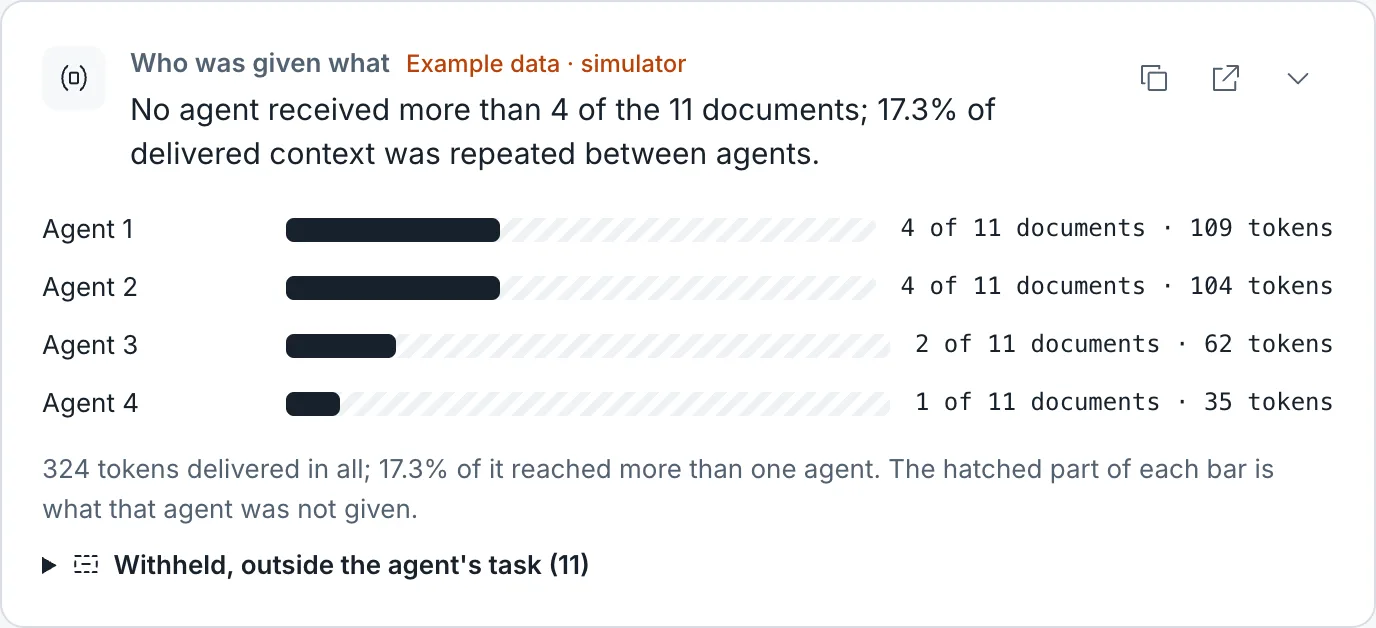
When agents talk, mistakes travel. Ours never talk.
Each agent gets a sealed, minimal package from the engine and hands its result back to the engine.
For youCost grows with the work, not with the conversation.
Law two
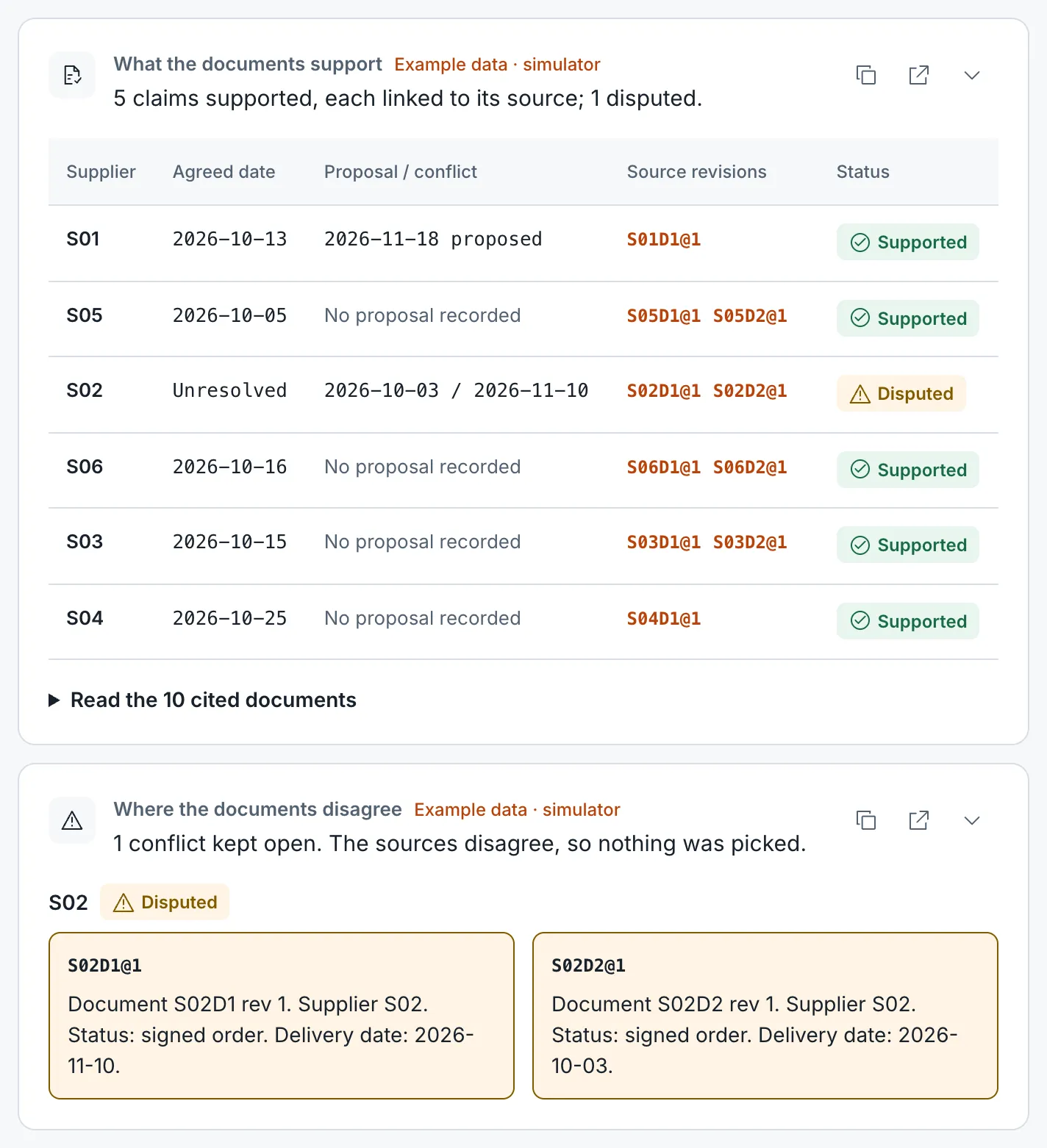
A model should not mark its own homework.
Nothing joins the answer until evidence checks and an independent judge from another model family pass it.
For youOne agent's mistake never becomes the next agent's premise.
Law three
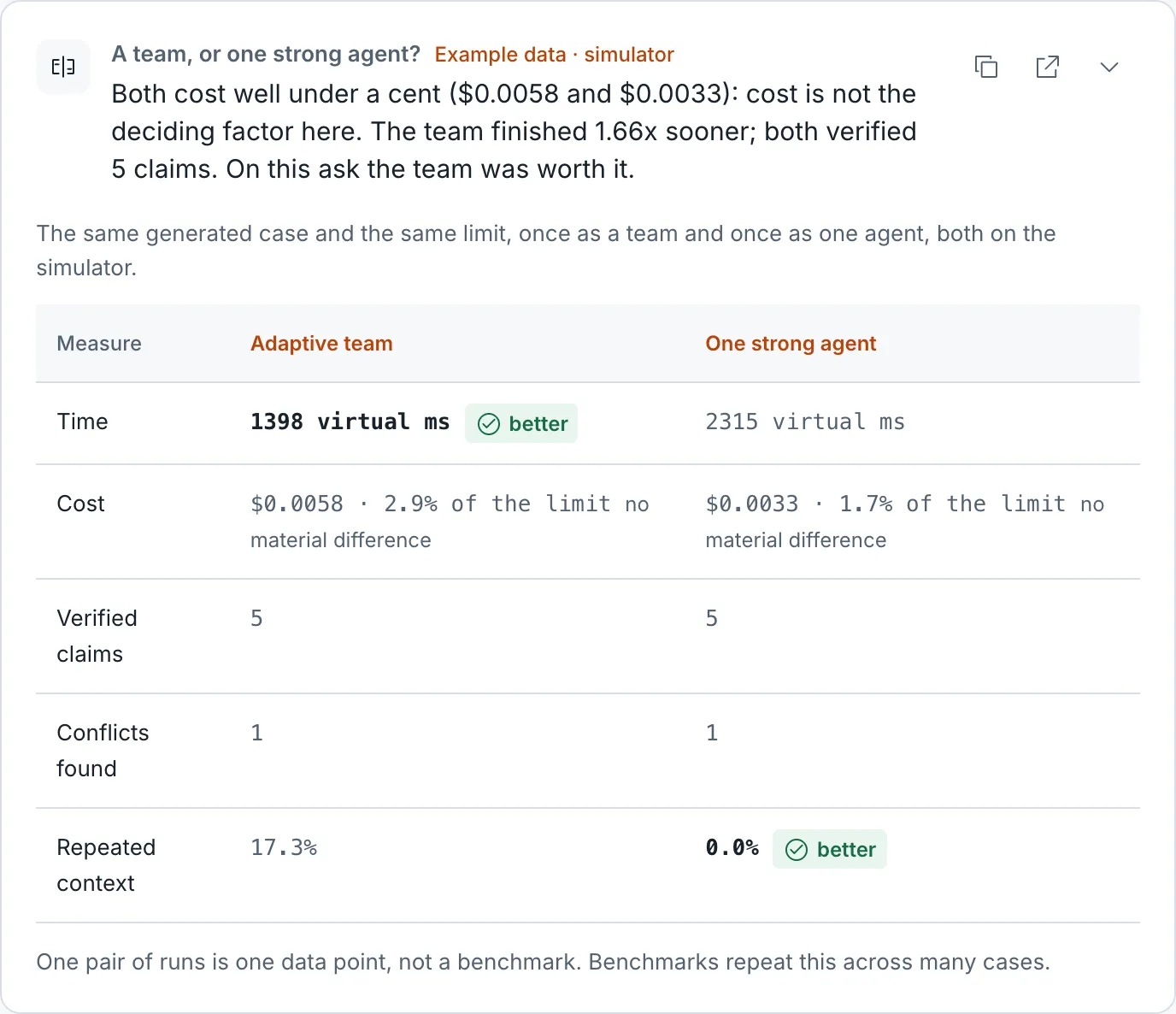
A team only when it pays.
The engine decides whether splitting will beat one strong model before money is spent, then measures it against one.
For youSometimes the answer is: use one model. It says so.
Watch it work.
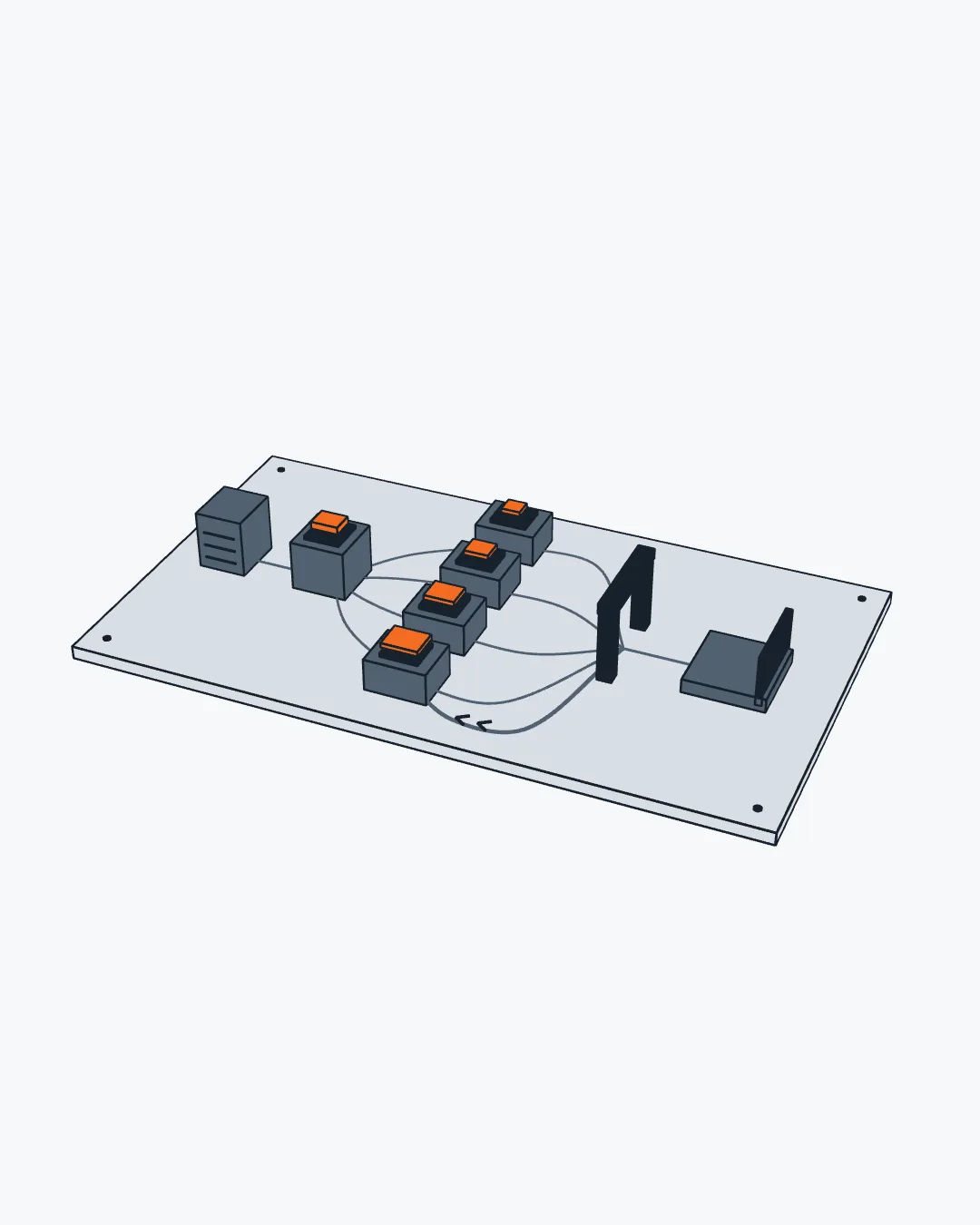
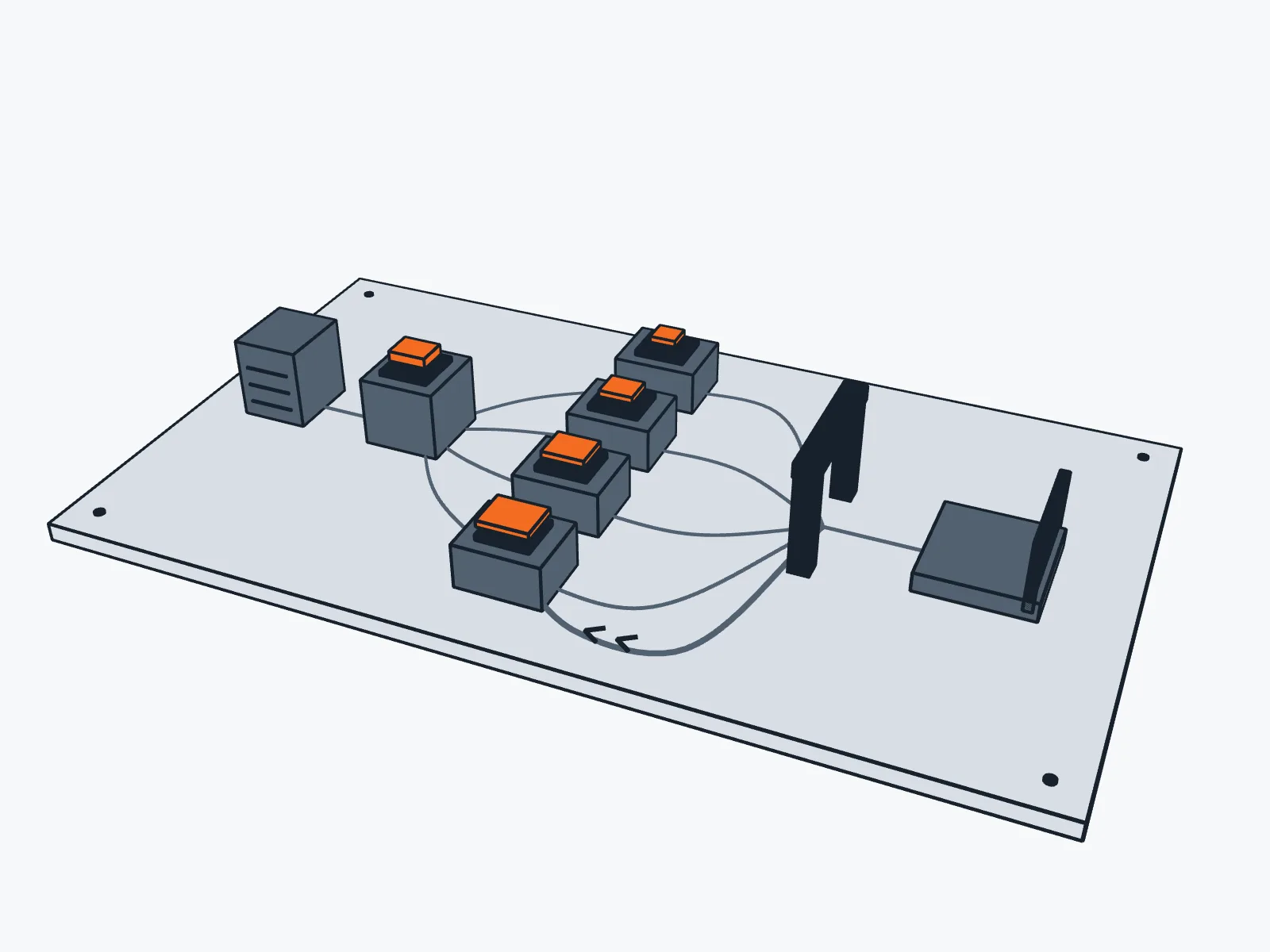
An illustration, not a recording of a run.
A hard spending limit
Reserved before every call.
Any model, mixed by role
Strong ones plan, small ones work.
A receipt for everything
Replayable.
Collective intelligence. Without the collective confusion.
The industry is racing on the first term. We fix the other two.
The aim
Small models. Exact context. Frontier answers.
One live case. A data point, not a benchmark.
On the first live case, a team of four GPT-5.4 mini workers returned the same four answers as GPT-6 Astra alone, about 1.7 times sooner and at about 15% of the cost; the judge, costing about a hundredth of a cent per run, skipped the one document that was a planted trap. One case, one seed: a data point, not a benchmark. In a simulator A/B the judge took wrong committed answers from 10 of 20 runs to 0 of 20.
Eight questions to ask any agent swarm.
Who decides what each agent is allowed to know?
The engine. A sealed, minimal package per task, recorded.
Can agents send each other messages?
No. Never. Each one talks only to the engine.
Who checks a result before it is kept?
An independent decision model from another family, on every claim.
Can a run spend more than I allowed?
No. Cost is reserved before each call; work that does not fit is refused.
Which models can I use?
Any, mixed by role: strong to plan, small to work, a different family to judge.
Can I see whether the team beat one model?
Yes. Same job, same budget, both ways, graded.
What do I keep afterwards?
Hash-chained receipts, the full event log and a replayable run.
Can I take my work elsewhere?
Yes. Your keys, your export, an open-source core planned.
Ask your own tool the same eight questions. We do not characterise other products here: capabilities differ and change, and several document budget and quota controls of their own. Where a framework suits you, we can sit beside it rather than replace it.
Three parts we built.
- 01
The context engine
Decides what each agent may know, and whether a team beats one model, before money is spent.
- 02
The swarm simulator
Runs the whole loop with no provider and no spend. Design a swarm and see what it would cost before paying for a token.
- 03
The Jev judge
An independent decision model answers typed questions at fixed points. It never writes text, so it cannot talk its way into an answer.
Works beside your framework
Built to be the layer a framework lacks. Keep your graph.
Honest status
The full loop, on a simulator, in private preview.
Live benchmarks.
Your own documents.